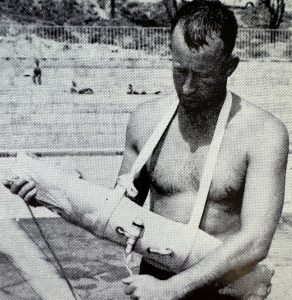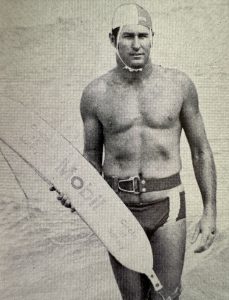
Over 100 years ago the world was a much smaller place. The ocean was almost as remote to man as the face of the moon. In the early days a band of brothers would grow to become known as Surf Life Savers. There were no IRBs, no rescue tubes, no rescue boards, no jet skis, no jet engine helicopters, just a belt and a reel and your mates to back you up.
“Surf” as we affectionately known it was born out of the spirit of the ANZACs. The sacrifices are the same. Mates risking their lives to save others. It’s grown to become an organisation so vast, so diverse, touching so many lives in so many places beyond the beach that it has become part of the very fabric of what it means to be Australian.
SLSQ Point Danger Branch as we know it today is made up of 11 clubs spanning between Tallebudgera SLSC to the north and Rainbow Bay SLSC to the south.
But it wasn’t always this way. Our story begins some 117 years ago, back in 1907.
The first surf lifesaving club was founded at Bondi in February 1907. Several others were set up soon after. On 18 October 1907 these clubs formed the Surf Bathing Association of New South Wales. Surf lifesaving clubs soon spread around the country, and the surf lifesavers became an Australian icon. Since 1907, it is estimated that lifesavers have rescued more than 685,000 people.
Surf Life Saving exists to save lives, create great Australians and build better communities. With 181,572 members and 314 affiliated Surf Life Saving clubs, Surf Life Saving Australia represents the largest volunteer movement of its kind in the world.
Over 100 years ago the world was a much smaller place. The ocean was almost as remote to man as the face of the moon. In the early days a band of brothers would grow to become known as Surf Life Savers. There were no IRBs, no rescue tubes, no rescue boards, no jet skis, no jet engine helicopters, just a belt and a reel and your mates to back you up.
“Surf” as we affectionately known it was born out of the spirit of the ANZACs. The sacrifices are the same. Mates risking their lives to save others. It’s grown to become an organisation so vast, so diverse, touching so many lives in so many places beyond the beach that it has become part of the very fabric of what it means to be Australian.
SLSQ Point Danger Branch as we know it today is made up of 11 clubs spanning between Tallebudgera SLSC to the north and Rainbow Bay SLSC to the south.
But it wasn’t always this way. Our story begins some 117 years ago, back in 1907.
The first surf lifesaving club was founded at Bondi in February 1907. Several others were set up soon after. On 18 October 1907 these clubs formed the Surf Bathing Association of New South Wales. Surf lifesaving clubs soon spread around the country, and the surf lifesavers became an Australian icon. Since 1907, it is estimated that lifesavers have rescued more than 685,000 people.
Surf Life Saving exists to save lives, create great Australians and build better communities. With 181,572 members and 314 affiliated Surf Life Saving clubs, Surf Life Saving Australia represents the largest volunteer movement of its kind in the world.
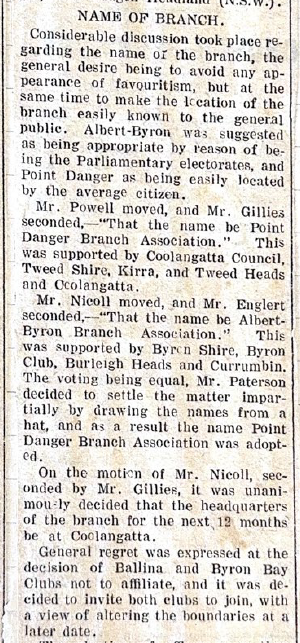
Point Danger Branch has been full of trailblazing members and their clubs. Members who have pushed the boundaries in their chosen areas of interest, who often faced criticism but preserved and were ultimately successful in developing and pioneering rescue equipment and techniques – many of which are still in use today. It is because of these members that the Branch can lay claim to many “firsts”:
And of course the Branch instrumental in the establishment of the organisation now known as Surf Life Saving Queensland in 1930 and subsequent Branch structure as we know it today.